
By Linda De Flavis
Two years ago, I got on a plane and went to Jamaica. It wasn’t the usual sun-and-sea vacation that tourists go there for: sipping cocktails with paper umbrellas in them, lying poolside within the high-security walls of a luxury resort. No, my trip was a literary pilgrimage, mostly taken on foot and local buses, journeying into areas described as ‘dangerous’ by the guidebooks. I wanted to see for myself the places of historical significance and revolutionary acts that I had discovered through the novels of Andrea Levy and Marlon James.
So imagine my excitement when I saw that Marlon James would be coming all the way to Singapore to speak at the Singapore Writers Festival—the mountain was coming to Mohamed!
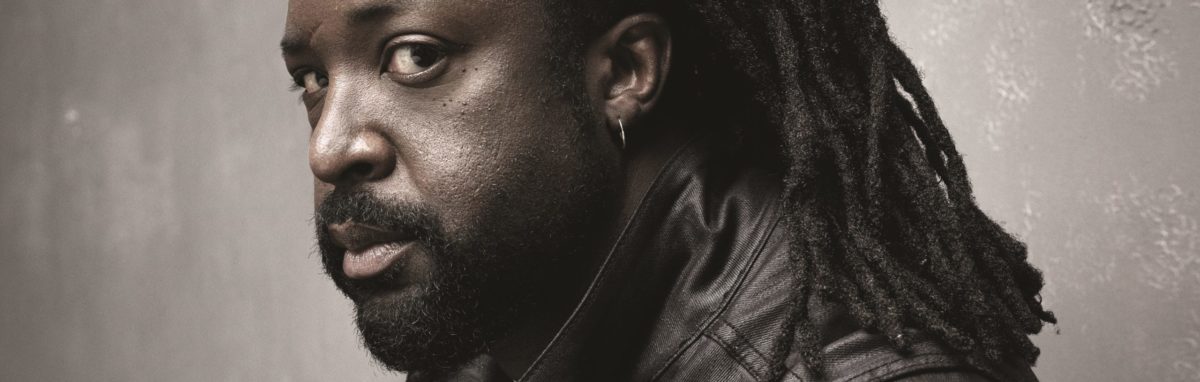
Marlon James was not at all what I had expected. His books drive you into a nightmare world of violence and insane cruelty, steeped in the brutal history of Jamaica; his Facebook posts go straight for the jugular in their attack on contemporary US politics. He should have been a glowering, brooding, morose presence. Instead, he was charming, funny, and kind. His chubby-cheeked smile gave him a cherubic look that was oddly incongruous with his writing.
I’ve often wondered how he is affected emotionally or mentally by the darkness of the places his imagination inhabits. I decided that would be my question for him but I would avoid asking it in relation to the ironically-titled Brief History of Seven Killings because I was afraid I might blurt out the truth: that it was the hardest 688 pages I have ever read. Sheer tenacity carried me through that novel. When I reached the last page it felt like coming up from a deep, dark lake for air. It wasn’t the patois that very nearly drowned me—I found that quite charming, especially the swear words which are uniquely and inventively Jamaican. It wasn’t the complex plot based on the political history and the involvement of the CIA in fighting a dirty American war on Jamaican soil. It wasn’t even the bewildering array of characters who appear and reappear at various intervals, changing their names, even speaking from the dead to confuse you further. No, it was the sheer bogged-down-in-it violence, like being caught in an endless repeat of a rap song about killings, killings, and more killings.
Instead I asked James about The Book of Night Women, which is also necessarily immersed in violence as it depicts slavery and the resistance movement in Jamaica, but that I felt more connected to, having grown up in Britain. Not that the truth of Britain’s engagement in slavery is actually taught in schools—far from it—the official narrative is still a flattering fiction presenting Wilberforce, ‘Amazing Grace’, and a Britain so enlightened it was the first country to abolish slavery (not true, it was Haiti, and as a result of a revolt that drove fear into the hearts of the plantation owners throughout the Caribbean). The Book of Night Women was not an easy read but it felt morally necessary to confront the ugly truth about slavery it represented. My strange Jamaican holiday, tracing the locations where Jamaican heroes of the resistance movement had lived and died, was a way to bear witness to their suffering and their courage.
I asked Marlon James if his writing took a heavy toll on him emotionally, or if at some point it became just a day job—the kind where he could get up to fix himself a sandwich and then go back to work, the way surgeons can stop to eat a pastrami-on-rye without any squeamishness about the body parts they’ve just dissected.
He answered that of course it was emotionally heavy, but he felt a huge burden to tell the stories of enslaved peoples as a way of bearing witness (I guess you could say that my Jamaica trip was evidence of how well that had worked). He also commented, rather acerbically, that however hard his books were to write and to read, they were far less painful than the actual experiences they narrated.
I had invited one of my students to come along to the talk and she asked Marlon James the best question of the evening: how did he know whose stories to choose to write? He replied that he didn’t—they chose him. He explained that sometimes the midpoint of a novel was the place where he had actually begun writing; as other characters invaded his imagination they took over and the writing expanded, going in different directions so that the beginning ended up someplace else.
It reminded me of Alice Walker who described her characters in The Color Purple as ‘trying to contact me, to speak through me.’ I love this idea of the writer as medium, attending to the stories of ancestral spirits whose voices must be heard. I’ve yet to personally experience this particular form of possession but I’ll keep listening.
Photo Credit: Mark Seliger
